
Postpartum Depression vs. Normal Adjustment: How to Tell the Difference
Adjusting to life with a newborn is overwhelming for every parent, but how do you know when it’s more than typical stress? This blog breaks down the difference between normal postpartum adjustment and postpartum depression, in a compassionate and relatable way.
Navigating Postpartum Emotions: What’s Normal and What’s Not

Bringing home a new baby is often described as magical, but for many parents, the experience feels more like a roller coaster of exhaustion, mood swings, and overwhelm. Between sleepless nights, endless feeding cycles, and adjusting to a completely new identity, it’s natural to feel off-balance.
But sometimes the struggle goes beyond "normal adjustment." Postpartum depression (PPD) is a real, common, and treatable condition, and knowing the difference matters. In this blog, we’ll explore what’s expected during postpartum recovery, what’s not, and how to tell when you may need extra support.
What Are Normal Postpartum Adjustment Challenges?
The postpartum period (often called the "fourth trimester") is filled with massive emotional, physical, and hormonal changes. Even in the best circumstances, it’s completely normal to experience:
Mood swings
Fatigue and overwhelm
Increased irritability
Crying spells
Self-doubt about parenting
Feeling disconnected from your pre-baby identity
Why These Normal Adjustments Happen

Adjusting to a newborn is demanding for many reasons:
Hormonal fluctuations: After delivery, estrogen and progesterone levels drop dramatically.
Sleep deprivation: Newborns don’t care about your circadian rhythm.
Identity shifts: You’re suddenly responsible for keeping a tiny human alive.
Physical recovery: Whether vaginal birth or C-section, the body is healing.
These challenges can feel overwhelming but typically improve with rest, support, and time.
What Is Postpartum Depression (PPD)?
Postpartum depression is a clinical condition that affects up to 1 in 7 birthing parents. It’s more intense, longer-lasting, and more disruptive than typical postpartum stress.
Common Symptoms of PPD:
Persistent sadness or emptiness
Loss of interest in activities
Difficulty bonding with the baby
Intense guilt or feelings of worthlessness
Anxiety or intrusive thoughts
Hopelessness
Trouble sleeping even when the baby sleeps
Changes in appetite
Thoughts of self-harm or harming the baby
PPD is not your fault. It’s caused by a mix of hormonal, environmental, and psychological factors.
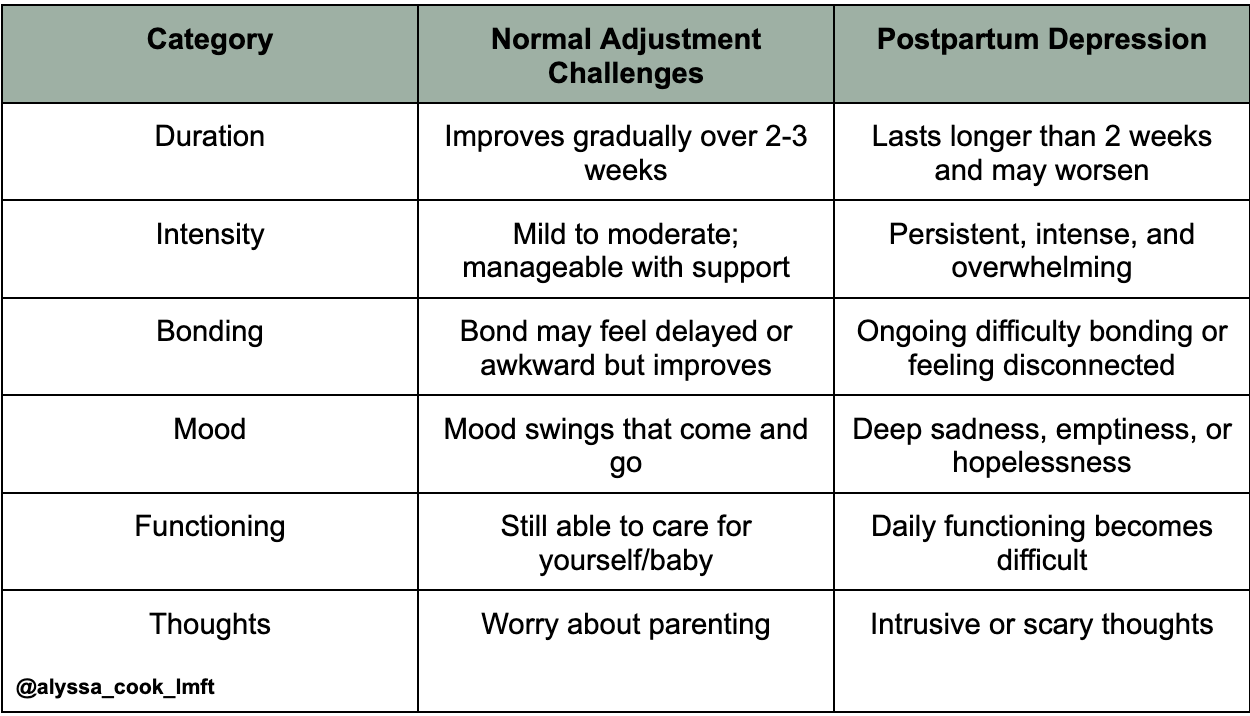
Key Differences: Normal Adjustment vs. Postpartum Depression
Here’s a simple breakdown to help illustrate the differences:
When Should You Seek Help?
If your symptoms:
last longer than two weeks,
interfere with daily functioning,
feel overwhelming or unmanageable,
or you’re experiencing intrusive or scary thoughts, it's time to reach out for help.
PPD is treatable with therapy, medication, support groups, or a combination of these.
Why Some People Are More Prone to PPD
There’s no single cause of postpartum depression, but risk factors include:
History of depression or anxiety
Traumatic birth experience
Lack of support from partner or family
Sleep deprivation
Hormonal sensitivity
NICU stay or medical complications
Previous pregnancy or infant loss
High expectations of self or perfectionism
Understanding these factors can help reduce shame and encourage early support.
How to Support Yourself Through Postpartum Recovery

Learning to care for yourself is essential, not selfish. Here’s how to support emotional health during the postpartum period:
1. Build a Support System
Accept help from friends, family, or postpartum doulas. Delegating tasks doesn’t make you less capable—it makes you human.
2. Prioritize Rest
Even short naps throughout the day can help restore emotional balance.
3. Connect with Other Parents
Support groups or parent-baby classes normalize the experience.
4. Lower Unrealistic Expectations
Your house doesn’t need to be spotless. Your baby doesn’t need a perfect routine. Good enough parenting truly is good enough.
5. Nourish Your Body
Hydration, balanced meals, and gentle movement can impact mood.
6. Create Moments of Self-Compassion
Use simple reminders like:
"I am learning."
"This phase is temporary."
"I deserve support, too."
When You’re Struggling: What Therapy Can Offer
Therapy can be incredibly helpful in the postpartum period, even if you’re not dealing with PPD. Working with a therapist gives you space to process identity changes, fears, relationships, and emotional overwhelm.
Therapists may use modalities like:
CBT to challenge intrusive thoughts
IFS to support overwhelmed internal parts
Mindfulness-based work to reconnect with the body
Emotion-focused therapy to process relationship shifts and communication
A therapist can help you build coping strategies, identify support needs, and reduce shame or isolation.
What About Partners?
Partners can also experience postpartum depression or anxiety, even without giving birth. Signs may include withdrawal, irritability, loss of interest, or feeling overwhelmed. The transition to parenthood impacts the whole family. Encourage partners to seek support if they’re struggling, you don’t have to navigate this alone.
Final Thoughts: You’re Not Failing, You’re Adjusting

Every parent experiences postpartum challenges. What you’re feeling doesn’t make you weak or inadequate, it makes you human. But if what you’re feeling goes beyond normal stress and starts impacting your ability to function, connect, or enjoy life, reaching out for help is one of the most loving things you can do for yourself and your baby. Postpartum depression is treatable, temporary, and nothing to be ashamed of. You deserve support, rest, compassion, and healing. If you're ready to talk to someone who understands postpartum mental health, I'm here to help you navigate this season with care and support.

How Attachment Styles Impact Adult Relationships
Your attachment style shapes how you connect with others, handle intimacy, and respond to emotional needs in relationships. Understanding your attachment style—whether secure, anxious, avoidant, or disorganized—can help you build healthier, more fulfilling connections. In this post, we’ll break down each style, how they show up in adulthood, and how to navigate relationships more effectively.

Understanding Your Attachment Style and How It Affects Your Relationships
Have you ever wondered why you react a certain way in relationships? Why some people seem so secure while others struggle with trust, intimacy, or independence? Attachment theory offers valuable insights into how we connect with others based on our early experiences with caregivers. These patterns, known as attachment styles, shape the way we navigate adult relationships—whether romantic, platonic, or professional. In this blog, we’ll break down the four main attachment styles, how they influence your relationships, and what you can do to develop a more secure attachment over time.
What Are Attachment Styles?
Attachment styles are patterns of relating to others, developed in early childhood based on interactions with caregivers. Psychologists John Bowlby and Mary Ainsworth pioneered this concept, which has since been widely used to understand human relationships.
The Four Main Attachment Styles
To better understand how attachment styles impact adult relationships, let’s break them down into a simple table:

How Each Attachment Style Impacts Adult Relationships
Secure Attachment: The Foundation of Healthy Relationships
People with a secure attachment style tend to have stable, fulfilling relationships. They are comfortable giving and receiving love, communicate openly, and handle conflicts with emotional maturity. If you have this style, you likely:
Feel at ease with emotional intimacy and independence
Trust your partner and expect the same in return
Manage conflicts constructively
What to work on: Even those with a secure attachment can face challenges. If you notice struggles, focus on continuing to communicate openly and setting healthy boundaries.

Anxious Attachment: Seeking Constant Reassurance
If you have an anxious attachment style, relationships may feel like an emotional rollercoaster. You crave closeness but often fear your partner will leave you. Common traits include:
Feeling insecure and needing frequent validation
Overanalyzing texts and interactions
Feeling rejected easily
How to grow: Work on self-soothing techniques, mindfulness, and learning to trust yourself rather than relying on a partner for validation. Therapy can be beneficial in helping you develop a sense of inner security.
Avoidant Attachment: Keeping People at a Distance
If you lean toward an avoidant attachment style, emotional intimacy might feel uncomfortable. You value independence and may push people away if they get too close. Signs of avoidant attachment include:
Preferring emotional distance in relationships
Struggling to express feelings
Feeling suffocated by too much closeness
What to work on: Practice emotional vulnerability and open communication. Relationships require balance—learning to lean on others doesn’t mean losing independence.
Disorganized Attachment: ThePush-Pull Struggle
A disorganized attachment style can feel like an internal battle—wanting closeness but fearing it at the same time. It often stems from trauma or inconsistent caregiving in childhood. Common traits include:
Fear of getting hurt but also fear of being alone
Mixed signals in relationships
Difficulty trusting others
How to grow: Self-awareness is key. Therapy, journaling, and learning to recognize patterns can help break the cycle and move toward a more secure attachment.
INFOGRAPHIC
How to Develop a More Secure Attachment Style
The good news? Attachment styles aren’t set in stone. With awareness and effort, you can move toward a more secure way of relating to others. Here are some steps to help:

1. Build Self-Awareness
Identify your attachment style by reflecting on past relationships.
Notice triggers—what makes you feel insecure or distant?
Journaling can help track patterns and emotions.
2. Challenge Negative Beliefs About Relationships
If you have anxious attachment, remind yourself that love isn’t about constant reassurance.
If you have avoidant attachment, challenge the belief that depending on others is a weakness.
3. Strengthen Communication Skills
Practice expressing feelings openly without fear.
Learn to ask for what you need in relationships.
Set healthy boundaries to avoid extremes of over-dependence or emotional withdrawal.
4. Work With a Therapist
Therapy is a great space to explore attachment wounds and develop healthier relationship patterns. A therapist can help:
Identify deep-rooted fears and triggers
Develop emotional regulation skills
Create new patterns for more fulfilling relationships

Moving Toward Healthier Relationships
Understanding your attachment style is a powerful step toward building better relationships. Whether you’re navigating romantic partnerships, friendships, or family dynamics, knowing how you connect with others allows you to make intentional changes. The goal isn’t perfection—it’s awareness, growth, and creating connections that feel fulfilling and safe.
If you’re struggling with attachment wounds or relationship challenges, therapy can be an excellent resource. Working with a professional can help you develop a secure attachment and experience healthier, more satisfying relationships.
Looking for support? If you’re ready to explore your attachment style and work toward healthier relationships, click the button below to set up a free consultation!

How to Foster Healthy Relationships and Set Boundaries
Navigating relationships can be challenging, especially when it comes to setting boundaries. Learn how to foster healthy relationships and establish clear boundaries from a therapist's perspective.

Building Strong Connections: The Importance of Healthy Relationships and Boundaries
Maintaining healthy relationships and setting boundaries are crucial aspects of our well-being. From personal to professional interactions, understanding how to foster positive connections while protecting our mental and emotional space can significantly improve our quality of life. As a therapist, I’ve seen firsthand how learning to establish and maintain healthy boundaries can transform relationships. Let’s dive into some practical tips on how to achieve this balance.
Understanding Healthy Relationships
What Defines a Healthy Relationship?
Healthy relationships are built on mutual respect, trust, and open communication. Whether it’s with family, friends, or colleagues, the core principles remain the same. Here are some key characteristics:
Respect: Valuing each other’s opinions and feelings.
Trust: Feeling secure and confident in each other’s actions.
Communication: Open, honest, and clear dialogue.
Support: Encouraging each other’s growth and well-being.
Equality: Sharing power and decision-making equally.
Why are Healthy Relationships Important?
Healthy relationships provide emotional support, enhance our sense of belonging, and contribute to our overall happiness. They can also serve as a buffer against stress and adversity, helping us to navigate life’s challenges more effectively.
The Role of Boundaries in Relationships
What Are Boundaries?
Boundaries are the limits we set for ourselves in relationships. They define what we are comfortable with and how we would like to be treated by others. Boundaries can be physical, emotional, or digital, and they vary from person to person.
Why Are Boundaries Essential?
Boundaries are essential for maintaining our mental and emotional health. They help prevent burnout, reduce resentment, and ensure that our needs are met. Without boundaries, we can easily become overwhelmed and feel taken advantage of.
How to Set Healthy Boundaries
Identify Your Needs and Limits
The first step in setting boundaries is to understand your own needs and limits. Reflect on what makes you feel uncomfortable or stressed in your relationships. Consider the following:
Physical boundaries: How much personal space do you need?
Emotional boundaries: How much emotional energy can you give and receive?
Time boundaries: How much time can you dedicate to others without neglecting yourself?
Digital boundaries: How do you manage your online interactions?

Communicate Clearly and Assertively
Once you’ve identified your boundaries, it’s important to communicate them clearly and assertively. Use “I” statements to express your needs without blaming or criticizing the other person. For example:
“I need some time to myself after work to recharge.”
“I feel overwhelmed when we talk about this topic frequently.”
“I prefer not to discuss my personal life at work.”
Be Consistent
Consistency is key when it comes to enforcing boundaries. If you allow others to cross your boundaries without consequences, they may not take them seriously. Politely but firmly remind others of your limits when necessary.
Respect Other's’ Boundaries
Just as you have your own boundaries, others have theirs too. Respecting others’ boundaries is crucial for building mutual trust and respect. Pay attention to their cues and adjust your behavior accordingly.
Common Challenges in Setting Boundaries
Guilt and Fear
Many people feel guilty or fearful about setting boundaries, worrying that they will hurt others or be perceived as selfish. Remember that setting boundaries is not about being unkind; it’s about taking care of yourself. Communicate your boundaries with empathy and understanding.
Resistance from Others
Some people may resist your boundaries, especially if they are used to you being more accommodating. Stand firm and reiterate your needs. Over time, they will likely come to respect your limits.
Internal Conflicts
You may struggle with internal conflicts when setting boundaries, especially if you have a history of people-pleasing or low self-esteem. Practice self-compassion and remind yourself that your needs are valid and important.
Practical Tips for Fostering Healthy Relationships
Prioritize Open Communication
Effective communication is the foundation of any healthy relationship. Make it a habit to check in with your loved ones regularly. Share your thoughts and feelings openly, and encourage them to do the same.
Practice Active Listening
Active listening involves fully focusing on the speaker, understanding their message, and responding thoughtfully. This not only improves understanding but also shows that you value their perspective.
Show Appreciation
Expressing gratitude and appreciation can strengthen your relationships. Acknowledge the efforts and qualities of those around you. Simple gestures, like saying “thank you” or giving a compliment, can go a long way.
Spend Quality Time Together
Spending quality time together helps deepen your connection. Whether it’s a family dinner, a weekend outing, or a casual chat over coffee, make an effort to be present and engaged.
Support Each Other’s Goals
Supporting each other’s goals and aspirations fosters a sense of partnership. Celebrate successes together and offer encouragement during challenging times. This mutual support can enhance your bond and boost morale.
Practice Empathy and Understanding
Empathy involves putting yourself in someone else’s shoes and understanding their feelings and perspectives. Practicing empathy can help resolve conflicts and build stronger connections. Show compassion and try to see things from their point of view.
Boundaries in Different Types of Relationships

Family Relationships
Family dynamics can be complex, making boundary-setting particularly challenging. Here are some tips for setting boundaries with family members:
Communicate openly: Share your feelings and explain why certain boundaries are important to you.
Be patient: Family members may need time to adjust to your boundaries.
Seek support: If necessary, involve a neutral third party, such as a therapist, to facilitate discussions.
Romantic Relationships
In romantic relationships, boundaries help maintain individuality and mutual respect. Consider the following:
Discuss expectations: Talk about your expectations and boundaries early in the relationship.
Respect privacy: Allow each other personal space and privacy.
Address issues promptly: Don’t let small issues fester. Address them calmly and constructively.
Friendships
Healthy friendships are based on mutual respect and understanding. Here’s how to set boundaries with friends:
Communicate your needs: Let your friends know what you’re comfortable with.
Be honest: If a friend crosses a boundary, address it openly and kindly.
Respect differences: Understand that your friends may have different boundaries than you.
Workplace Relationships
Boundaries in the workplace are essential for maintaining professionalism and work-life balance. Consider these tips:
Set clear expectations: Communicate your availability and limits to colleagues and supervisors.
Take breaks: Make time for regular breaks to avoid burnout.
Separate work and personal life: Try to keep work-related tasks and communications within designated hours.
Self-Care and Boundaries
The Connection Between Self-Care and Boundaries
Self-care and boundaries are closely linked. By setting boundaries, you create the space needed for self-care activities. Conversely, practicing self-care can reinforce your boundaries by ensuring you have the energy and resilience to uphold them.

Incorporate Self-Care into Your Routine
Make self-care a non-negotiable part of your routine. This might include activities like:
Exercise: Physical activity can reduce stress and improve mood.
Mindfulness: Practices like meditation or deep breathing can enhance emotional regulation.
Hobbies: Engaging in activities you enjoy can provide a sense of fulfillment and relaxation.
Rest: Ensure you get enough sleep and take breaks when needed.
Recognize the Signs of Boundary Overstepping
Being attuned to your emotional and physical responses can help you recognize when your boundaries are being overstepped. Signs may include:
Feeling drained: Constantly feeling exhausted or overwhelmed.
Resentment: Harboring negative feelings towards others.
When you notice these signs, it’s a signal to reassess and reinforce your boundaries.
Seeking Professional Help
When to Seek Help
If you find it challenging to set or maintain boundaries, or if you’re struggling with unhealthy relationships, seeking professional help can be beneficial. A therapist can provide guidance, support, and strategies tailored to your specific needs.
How Therapy Can Help
Therapy can help you:
Identify and understand your boundaries: Gain clarity on what boundaries are important to you.
Develop communication skills: Learn how to express your boundaries effectively.
Build self-esteem: Strengthen your self-worth and confidence in setting boundaries.
Navigate complex relationships: Get support in managing challenging relationship dynamics.
Finding the Right Therapist

Finding a therapist who aligns with your needs and values is crucial. Look for someone who specializes in relationship dynamics and boundary-setting. Don’t hesitate to ask for a consultation to see if they’re a good fit for you.
Embrace the Journey Towards Healthier Relationships and Stronger Boundaries
Fostering healthy relationships and setting boundaries are essential skills for maintaining mental and emotional well-being. By understanding your needs, communicating clearly, and practicing self-care, you can create fulfilling and respectful relationships in all areas of your life. Remember, it’s a journey, and it’s okay to seek support along the way. If you need help navigating your relationships and boundaries, don’t hesitate to reach out to a therapist. Your well-being is worth it.

Surviving the Holiday Hustle: Your Guide to a Stress-Free Season
The holidays are often seen as the most magical time of the year, but let's be real—they can also be super stressful! From endless to-do lists to dealing with family dynamics, it's no wonder many of us feel overwhelmed. This blog is here to help you navigate the holiday hustle with ease. Learn how to prepare for the season, set boundaries, practice self-care, and enjoy the little moments. Whether you're hosting a big holiday gathering or just trying to get through the month, these tips will help you find more joy and less stress during the holidays. Happy holidays, everyone!

Stress-Free Holiday Tips: How to Navigate the Season with Ease
The holidays are often seen as the most magical time of the year, filled with joy, family, and festivities. But let’s be real, they can also be a major source of stress, anxiety, and even dread. There are plenty of reasons why the holiday season might not be your favorite time of the year. Maybe you're not close with family, don’t have anywhere to go, or just feel overwhelmed by the endless to-do lists. Even if you do love the holidays, it's normal to feel stressed and exhausted at some point. And guess what? That's totally okay.
This blog isn’t here to rain on the holiday parade but to share some tips to make the season a bit easier and more enjoyable. Whether you're feeling stressed out or simply want to make the most of the holidays, these tips are for you—and for all my therapist friends, they might be great for your clients too! 😊
Be Prepared for the Holiday Season
Plan Ahead and Know Your Triggers
First things first: be prepared. If the holidays tend to bring you down or stress you out, start planning ahead. Knowing what triggers your stress and anxiety can help you manage it better. Take some time to think about what specifically makes this time of year tough for you. Once you’ve identified your triggers, you can come up with a plan to handle them. Maybe it’s scheduling some alone time, setting boundaries, or simply being aware of your feelings. Whatever it is, being prepared can make a huge difference.
Take Time for Yourself Every Day
Self-Care Isn’t Just a Buzzword
Self-care is crucial, especially during the holiday season. With so many moving parts—people coming and going, prepping for guests, hosting events—it’s easy to feel overwhelmed. The holidays often come with a never-ending to-do list that can leave you feeling like you’re constantly running on empty.
Even if your schedule is packed, carve out a little time each day just for you. Do something you enjoy, even if it’s just a few minutes. It could be as simple as savoring a cup of coffee in the morning, reading a book, or taking a short walk. These small moments of self-care can help recharge your batteries and make the rest of the day feel more manageable.

Set Boundaries and Stick to Them
Boundaries: Easier Said Than Done
Boundaries can be tough, especially around the holidays. Family and friends might have high expectations, and it’s easy to get roped into doing more than you can handle. Maybe someone asks you to host an extra dinner or buy another gift. It all adds up quickly.
Set clear boundaries early on and communicate them to your loved ones. Let them know what you can and cannot do. It might feel awkward or difficult at first, but trust me, it’s worth it. Setting boundaries helps protect your mental health and ensures you’re not stretching yourself too thin.
Set a Budget and Stick to It
Financial Stress Is Real
The holiday season can be a financial strain. It’s tempting to go all out and buy perfect gifts for everyone, but that can lead to stress and regret later. Before you start shopping, set a budget. Decide how much you want to spend on each person and stick to it. Having a budget helps you avoid the financial hangover that often follows the holidays and allows you to enjoy the season without the added stress of money worries.
Enjoy the Little Moments
Savor the Simple Joys
Amidst all the hustle and bustle, don’t forget to enjoy the little moments. The holidays aren’t just about big events and perfect Instagram posts. Sometimes, the simplest things bring the most joy. Whether it’s watching a holiday movie, baking cookies, or just hanging out with loved ones, these small moments are what make the season special.

Don’t Be Afraid to Say No
Prioritize Your Well-Being
The holidays often come with a million invitations and obligations. It’s okay to say no. You don’t have to attend every event or participate in every activity. Listen to your body and mind, and do what feels right for you. Saying no when you need to can help reduce stress and make the holidays more enjoyable.
Stay Active
Keep Moving
Staying active during the holiday season can help manage stress and improve your mood. Whether it’s a brisk walk around the neighborhood, a yoga session, or even a dance party in your living room, find ways to keep moving. Exercise releases endorphins, which can boost your overall well-being and help you feel more balanced.
Seek Support When Needed
It’s Okay to Ask for Help
If you’re struggling during the holidays, don’t hesitate to seek support. Whether it’s talking to a friend, family member, or therapist, reaching out for help can make a big difference. You don’t have to go through it alone. There are people who care about you and want to support you.

Create New Traditions
Make the Holidays Your Own
If old traditions bring you more stress than joy, why not create new ones? Starting new traditions that are meaningful and enjoyable for you can bring a fresh perspective to the holiday season. Whether it’s a new holiday recipe, a fun activity, or a new way of celebrating, creating new traditions can make the holidays more special.
Practice Gratitude
Focus on the Good
Practicing gratitude can help shift your focus from what’s stressing you out to what you’re thankful for. Take a moment each day to reflect on what you’re grateful for, whether it’s the people in your life, your health, or simple pleasures. Practicing gratitude can improve your overall outlook and make the holiday season more enjoyable.
Conclusion: Navigate the Holidays with Ease
So there you have it! The holidays can be a wonderful time, but they can also be stressful and exhausting. Whether you’re hosting or traveling, these tips can help make the season more manageable. Remember, the holidays are about joy and togetherness. By preparing ahead, setting boundaries, and taking care of yourself, you can navigate the holiday hustle with ease and maybe even enjoy it a little more.
Happy holidays, everyone! 🎄

Parenting in the Digital Age: Navigating Screen Time and Raising Balanced Kids
In today's digital age, managing your child's screen time can feel like an uphill battle. But don't worry, I've got your back! In this blog, we'll dive into practical tips for navigating the world of screens and raising well-balanced kids. From setting boundaries to encouraging offline activities, you'll find strategies to help your family thrive.
Practical Tips for Managing Kids’ Screen Time

Let’s face it: screens are everywhere. From smartphones to tablets, technology is a huge part of our daily lives. While screens can be educational and entertaining, too much screen time can be detrimental to kids' development. So, how do we strike a balance? Here are some friendly, practical tips to help manage your child's screen time and promote a healthier lifestyle.
Make Homework a Priority
Schoolwork First, Screens Later
Homework should always come before screen time. We’ve all heard the classic, "I'll start my homework in 10 minutes," which often turns into an hour (or more). To prevent procrastination, establish a rule that homework must be completed before any recreational screen time. This sets a clear priority and helps kids understand the importance of their schoolwork.
Create a Homework-Friendly Environment
Set up a designated homework space that is free from distractions. Ensure this area is well-lit, quiet, and stocked with all the necessary supplies. Having a specific place for homework can help kids stay focused and make the transition from school to home a bit smoother.
Limit Screen Time
Set Daily Limits
The amount of screen time kids get these days is astounding. To manage this, set a daily screen time limit that includes both school-related and recreational use. While it’s unrealistic to eliminate screens entirely, setting a reasonable limit helps kids balance their activities.
Be Consistent
Consistency is key. Once you set the limits, stick to them. If the daily screen time limit is two hours, make sure it’s enforced. This consistency helps children understand boundaries and the importance of adhering to them.
Set Restrictions on Electronic Devices
Utilize Parental Controls
Most devices have built-in parental controls that allow you to set restrictions on apps and websites. Use these features to block access to social media and other distractions during homework time. This can help kids stay on task and avoid the temptation of sneaking in some screen time.
Monitor Online Activity
Keep an eye on what your kids are doing online. Regularly check their browsing history and the apps they use. This not only ensures they’re staying safe but also helps you understand their digital habits and guide them appropriately.

Encourage Outside Hobbies or Activities
Promote Physical Activities
Encourage your kids to engage in physical activities outside of school. Whether it’s joining a sports team, taking up a hobby like biking, or simply playing in the backyard, physical activity is crucial for their overall development. Plus, it provides a much-needed break from screens.
Schedule Family Time
Plan regular family activities that don’t involve screens. This could be anything from board games and cooking together to hiking and exploring nature. These activities not only reduce screen time but also strengthen family bonds.
Create a Balanced Routine
Establish a Daily Schedule
Creating a balanced daily routine helps kids manage their time effectively. Include time for homework, chores, physical activities, and yes, some screen time too. A well-structured day ensures that they get a healthy mix of activities.
Prioritize Sleep
Screens can interfere with sleep, especially if used right before bedtime. Establish a no-screens rule at least an hour before bed and encourage relaxing activities like reading or listening to calming music instead.

Educate About Screen Time
Explain the Impact
Talk to your kids about the effects of too much screen time. Explain how it can impact their health, sleep, and school performance. Educating them helps them understand why limits are necessary and encourages them to make healthier choices on their own.
Lead by Example
Kids often mimic their parents' behavior. Set a good example by managing your own screen time and engaging in offline activities. Show them that life beyond screens is fulfilling and enjoyable.
Foster Social Connections
Encourage Face-to-Face Interactions
Encourage your kids to spend time with friends in person rather than just online. Playdates, group activities, and family gatherings help them develop social skills and build stronger, real-life connections.
Limit Social Media
While social media can be a way to stay connected, it can also lead to issues like cyberbullying and social comparison. Monitor their social media use and encourage more meaningful, offline interactions.
Balance Technology with Nature
Nature Time
Make it a habit to spend time in nature. Whether it's a weekend hike, a visit to the park, or even gardening at home, connecting with nature has numerous benefits for kids. It reduces stress, promotes physical health, and provides a refreshing break from screens.
Digital Detox Days
Implement regular digital detox days where the whole family takes a break from screens. Use this time to engage in outdoor activities, arts and crafts, or other creative pursuits. It’s a great way to recharge and reconnect.

Raising Kids in the Age of the Internet
Navigating the world of screens and technology can be challenging, but it’s not impossible. By setting clear boundaries, promoting offline activities, and leading by example, you can help your kids develop a healthy relationship with technology. Remember, it’s all about balance. Encourage your children to enjoy the benefits of technology while also exploring the world beyond the screen.
Raising kids in the digital age is no easy feat, but with these tips, you can help them thrive both online and offline. As always, if you have any questions or need further guidance, feel free to reach out. Happy parenting!