
Quieting the Inner Critic: How to Shift Your Self-Talk and Build Self-Compassion
Your inner critic is that harsh voice in your head that says you're not good enough. Learn how to identify it, respond with self-compassion, and develop a healthier inner dialogue.
Understanding Your Inner Critic and How to Talk Back

We all have that voice in our head—the one that chimes in when we mess up, feel unsure, or try something new. “You’re not good enough.” “Why did you say that?” “You’ll never get it right.” This voice is often referred to as the inner critic, and while it might sound like it’s trying to keep us safe, it often causes more harm than good.
In this blog, we’ll unpack what the inner critic is, where it comes from, and how to respond to it differently. We’ll also explore the empowering alternative: the inner coach. If you're ready to turn down the volume on self-judgment and turn up the self-compassion, you're in the right place.
What Is the Inner Critic?
The inner critic is the internal voice that judges, shames, and doubts us. It’s the part of our mind that points out our flaws, magnifies our mistakes, and predicts failure. The inner critic might sound like:
“You always mess things up.”
“Why can’t you be more like them?”
“No one is going to take you seriously.”
Where Does the Inner Critic Come From?

The inner critic often develops early in life as a way to cope with difficult environments or meet the expectations of caregivers, teachers, or society. While it may have once served a protective purpose, it tends to become overactive and unhelpful in adulthood.
Common sources of the inner critic include:
Childhood criticism or unrealistic expectations
Trauma or neglect
Cultural or societal pressures
Perfectionism
The Impact of the Inner Critic on Mental Health
When left unchecked, the inner critic can fuel issues like anxiety, depression, low self-esteem, and burnout. It can keep you stuck in fear, people-pleasing, or procrastination.
How the Inner Critic Affects You
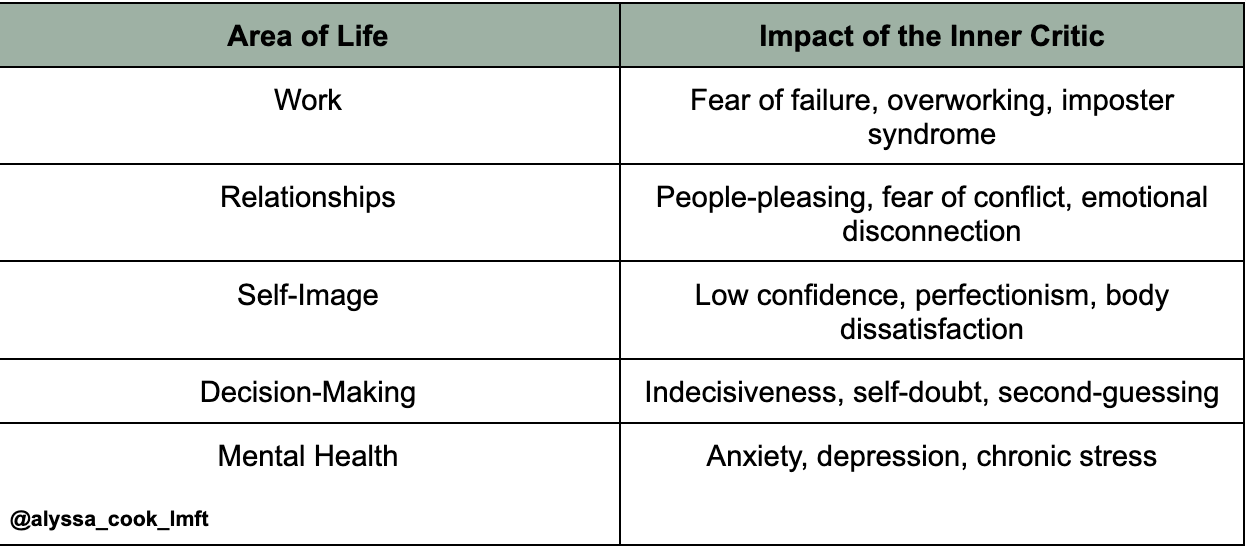
Recognizing the Voice of Your Inner Critic
The first step in healing your relationship with your inner voice is becoming aware of it. Start noticing when your self-talk is harsh, judgmental, or unkind. Ask yourself:
Would I say this to someone I care about?
Does this voice motivate me—or shut me down?
Where did I learn to talk to myself this way?
Keeping a journal or thought log can be a powerful tool to bring these thoughts into the light.
Inner Critic vs. Inner Coach
Let’s introduce a healthier voice: the inner coach. Unlike the inner critic, the inner coach is supportive, realistic, and encouraging. It doesn’t pretend everything is perfect—it just doesn’t tear you down.
Key Differences
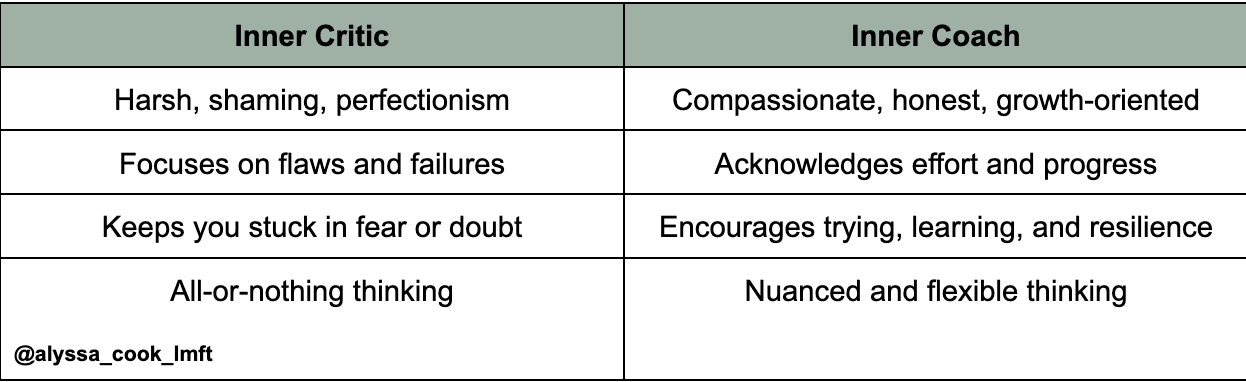
You can start to shift your inner narrative by learning how to replace critical thoughts with more compassionate ones.
How to Respond Differently: Practical Strategies
Changing your inner dialogue takes time and practice, but it’s absolutely possible. Here are some techniques that can help:
1. Name Your Inner Critic
Give it a name or identity—like "The Perfectionist," "The Worrier," or even something playful like “Judgey McJudgeface.” Naming helps you create some distance and notice when it's showing up.
2. Use the ABC Model
Adapted from CBT (Cognitive Behavioral Therapy):
A – Activating event: Something happens (e.g., you make a mistake at work)
B – Belief: “I’m terrible at my job.”
C – Consequence: You feel anxious and avoid taking initiative
Challenge the belief by asking: What’s the evidence for and against this? What would I say to a friend in this situation?
3. Reframe the Thought
Reframe “I always fail” into “This was hard, but I’m learning.” Turn “I’m not enough” into “I’m doing the best I can right now.”
4. Practice Self-Compassion
This means speaking to yourself with kindness, especially when things don’t go as planned. Try:
“It’s okay to make mistakes.”
“This is tough, and I’m not alone.”
“I can learn and grow from this.”
5. Talk Back in Writing
Write a letter from your inner critic—and then write a letter in response from your inner coach or compassionate self. This is a powerful exercise to externalize the negative voice and offer yourself support.
6. Use Affirmations (That Actually Work for You)
Not cheesy, fake-positive ones—but grounded ones that resonate. Try:
“I am learning to be kind to myself.”
“Progress matters more than perfection.”
“I can hold space for my flaws and my strengths.”
When the Inner Critic Gets Loud: Triggers to Watch For

Certain situations can make the inner critic more vocal. Being aware of these can help you catch it in action.
Common triggers include:
Transitions (new job, new relationship)
Feedback or perceived failure
Social comparison
High-stress or burnout
Feeling emotionally vulnerable
Notice your patterns—then bring in your inner coach.
How Therapy Can Help
You don’t have to navigate this work alone. A therapist can help you:
Recognize and challenge core beliefs
Understand the origins of your inner critic
Build a toolbox of self-compassion and coping skills
Practice skills like thought reframing and self-validation
Modalities like CBT, IFS (Internal Family Systems), and ACT (Acceptance and Commitment Therapy) are especially helpful when working with the inner critic.
Small Daily Practices to Rewire Your Inner Dialogue
Healing your inner narrative doesn’t happen overnight—but consistent, gentle practice makes a difference. Try adding some of these into your routine:
Start your day with a grounding affirmation
Take 60 seconds to notice and name your thoughts
Journal one thing you’re proud of each day
End your day with a self-compassion check-in: “What did I need today that I didn’t get?”
Final Thoughts: You Are Not Your Inner Critic

The inner critic might always be part of your mental landscape—but it doesn’t have to take the wheel. With awareness, practice, and support, you can build a new way of relating to yourself that’s rooted in compassion and courage.
You are not broken for having an inner critic. You are human. And you have the power to choose a different voice—the voice of your inner coach, your wise self, your compassionate inner healer.
If you’re ready to get support in quieting your inner critic and building a stronger, more supportive inner voice, therapy can be a powerful place to start. Reach out if you’d like to talk more!

Breaking Free: How to Heal from People-Pleasing Tendencies
Always saying yes even when you want to say no? People-pleasing can lead to exhaustion, resentment, and a loss of self-identity. This blog will guide you through understanding why you people-please and how to break free from the habit with confidence.
Learning to Put Yourself First: Healing from People-Pleasing

If you often find yourself saying yes when you want to say no, avoiding conflict at all costs, or constantly seeking approval, you might struggle with people-pleasing tendencies. While it’s great to be kind and helpful, constantly putting others before yourself can lead to exhaustion, resentment, and a loss of self-identity.
The good news? You can heal from people-pleasing tendencies and start living life on your own terms. Let’s explore why we people-please, how it affects us, and the steps to break free from this exhausting cycle.
Why Do We People-Please?
People-pleasing isn’t just about being nice—it’s often a learned survival strategy. Here are some common reasons why people develop this habit:
1. Fear of Rejection or Abandonment
Many people-pleasers grew up in environments where approval was conditional. Saying no felt like a risk of losing love or acceptance.
2. Avoidance of Conflict
Keeping the peace can feel easier than expressing disagreement, especially if conflict in the past led to stress or emotional pain.
3. Low Self-Worth
If you don’t believe your needs are as important as others’, you might feel obligated to prioritize them over yourself.
4. External Validation
When your self-esteem relies on making others happy, it can feel impossible to say no without guilt.
5. Cultural or Societal Expectations
Some cultures and upbringings emphasize self-sacrifice, making people-pleasing feel like an obligation rather than a choice.
The Costs of People-Pleasing
While being accommodating can seem positive, chronic people-pleasing has consequences:

How to Stop People-Pleasing and Start Prioritizing Yourself

Healing from people-pleasing doesn’t mean becoming selfish—it means learning to value yourself just as much as you value others. Here’s how you can start:
1. Identify Your Patterns
Pay attention to when and why you say yes. Are you agreeing out of genuine willingness, or do you feel pressured?
2. Challenge Your Beliefs
Ask yourself:
What will actually happen if I say no?
Do I believe my worth depends on making others happy?
Am I sacrificing my well-being for someone else’s comfort?
3. Practice Saying No
Start small—decline a minor request and notice that the world doesn’t fall apart. Use gentle but firm language:
"I appreciate the invite, but I need some time for myself."
"That sounds great, but I’m unable to take that on right now."
"I can’t help this time, but I hope it goes well!"
4. Set Boundaries with Confidence
Boundaries protect your energy and emotional well-being. Remember:
Boundaries aren’t mean—they’re necessary.
You don’t need to explain or justify your no.
Saying no allows you to say yes to things that truly matter to you.
5. Prioritize Your Own Needs
Ask yourself regularly:
What do I need right now?
Am I honoring my own limits?
Is this decision serving me as well as others?
6. Let Go of Guilt
It’s okay if people are disappointed by your no. Their feelings are not your responsibility—your well-being is.
7. Seek Support

A therapist can help you work through deep-rooted patterns and build confidence in setting boundaries.
You Deserve to Take Up Space
People-pleasing may have once been a way to feel safe and accepted, but it doesn’t have to define you. Learning to prioritize yourself isn’t selfish—it’s self-respect.
The next time you feel compelled to say yes when you want to say no, pause. Check in with yourself. Give yourself permission to make decisions that serve you.
You deserve relationships and commitments that feel balanced, fulfilling, and healthy. And that starts with you saying yes to yourself.

Overcoming Imposter Syndrome in Your Career: Recognizing Your Worth and Owning Your Success
Feeling like a fraud at work? You're not alone. Impostor syndrome affects even the most successful professionals, making them question their achievements and self-worth. Learn how to recognize impostor syndrome, understand why it happens, and use practical strategies to build confidence in your career.

How to Stop Feeling Like a Fraud and Starting Your Achievements
Ever feel like you're just faking it at work and that, any minute now, someone will call you out for not knowing what you're doing? You're not alone. Impostor syndrome is incredibly common, especially among high achievers, creatives, and professionals stepping into new roles. It’s that nagging voice telling you that you don’t deserve your success, that you just got lucky, or that everyone else knows more than you do. Sound familiar? The good news is, you can break free from impostor syndrome and start embracing your skills, expertise, and accomplishments. Let’s talk about how.
What is Imposter Syndrome (And Why Do So Many of Us Experience It)?
The Psychology Behind Feeling Like a Fraud
Impostor syndrome is that internal belief that you’re not as capable as people perceive you to be. It was first identified in the 1970s by psychologists Pauline Clance and Suzanne Imes, who found that many successful people struggle with persistent self-doubt. Despite clear evidence of their competence, people with impostor syndrome often attribute their achievements to external factors like luck, timing, or deception rather than their own hard work and skills.
It can manifest in different ways, including:
Perfectionism: Setting impossibly high standards and feeling like a failure when you don’t meet them.
Overworking: Believing you have to work twice as hard to prove yourself.
Avoidance: Dodging challenges or opportunities for fear of being “found out.”
Discounting achievements: Brushing off praise or success as no big deal.
So, if you’ve ever felt like your success is just luck or that you don’t really belong in your field, you’re experiencing the classic symptoms of impostor syndrome.

Imposter Syndrome vs. Healthy Self-Doubt
Common Triggers of Imposter Syndrome in Your Career

Career Changes and Promotions
Starting a new job or stepping into a leadership role can make impostor syndrome flare up. It’s easy to feel like you don’t have enough experience or that you’re not as qualified as your peers. The truth? No one knows everything. Every role comes with a learning curve, and growth requires discomfort.
High Expectations and Pressure to Succeed
If you work in a competitive industry or come from a background where success was heavily emphasized, the pressure to perform can make you question your abilities. The more you achieve, the higher the stakes feel, making it harder to internalize your success.
Working in a Male-Dominated or Highly Competitive Field
Research shows that impostor syndrome is particularly common among women, minorities, and individuals in fields where they are underrepresented. The feeling of needing to “prove” yourself can intensify when you don’t see others like you in similar roles.
How to Overcome Imposter Syndrome and Build Confidence
Reframe Your Thoughts
Instead of thinking, “I don’t belong here,” try shifting your perspective to, “I am learning and growing, just like everyone else.” Recognizing that doubt is a normal part of professional growth can help you reframe negative thoughts and build confidence.

Keep a “Wins” Journal
Whenever you receive positive feedback, accomplish a goal, or overcome a challenge, write it down. Keeping track of your achievements can serve as a tangible reminder of your progress and capabilities.
Talk About It
One of the best ways to combat impostor syndrome is to talk about it. You’d be surprised how many of your colleagues and mentors have felt the same way at some point. Opening up about your experiences can help normalize the feeling and give you valuable insights from others who have overcome it.
Accept That Perfection Doesn’t Exist
Nobody is perfect, and no one expects you to be. Mistakes are part of growth. Instead of aiming for perfection, strive for progress. Celebrate small wins and allow yourself the grace to learn along the way.
Seek Professional Guidance
If impostor syndrome is holding you back from pursuing new opportunities, working with a therapist or career coach can be incredibly helpful. They can help you identify limiting beliefs, develop strategies for building confidence, and reframe negative self-talk.
Moving Forward with Confidence in Your Career
Recognizing impostor syndrome for what it is—a feeling, not a fact—can help you take back control of your narrative. You are not an impostor. Your skills, knowledge, and hard work have brought you to where you are today. So the next time doubt creeps in, remind yourself: You earned this. And you deserve to be here.

Letting Go of the Past: How to Overcome Self-Criticism and Embrace Growth
Self-criticism can be a heavy burden, often keeping us stuck in the past and preventing us from moving forward. In this blog, we'll explore how to overcome self-criticism, release past mistakes, and embrace a healthier mindset for personal growth. As a therapist, I’ll guide you through practical tips to let go of the past and step into a more empowered version of yourself.
Overcoming Self-Criticism and Letting Go of Past Mistakes

We all have that inner voice that pops up when we make a mistake, don’t we? That voice that tells us we’re not good enough, that we’ll never change, or that we’ll never be able to move past a misstep. It’s a form of self-criticism that many of us are all too familiar with. Unfortunately, this inner critic can hold us back from growing, healing, and truly embracing our potential.
As a therapist, I’ve worked with countless individuals who find themselves stuck in the cycle of self-doubt and regret. The good news is that self-criticism isn’t a permanent fixture in our lives—it’s something we can work to overcome. In this post, I’ll share some strategies to help you move on from past mistakes, embrace growth, and cultivate a more compassionate relationship with yourself.
Understanding Self-Criticism: Why We Struggle with It
Before we can work on overcoming self-criticism, it’s important to understand where it comes from. For many of us, it’s a learned behavior. From a young age, we’re often conditioned to be our own toughest critics. Whether it’s from perfectionist parents, societal pressures, or our own high standards, we start to develop an inner voice that focuses on what’s wrong instead of what’s right.
In therapy, we call this “negative self-talk.” It’s that inner dialogue that reinforces feelings of inadequacy, shame, and guilt. The problem with negative self-talk is that it doesn’t help us grow—it only keeps us stuck in a loop of frustration and self-judgment.
But the good news is that just like any learned behavior, self-criticism can be unlearned. With the right tools and mindset shifts, you can begin to quiet that inner critic and start embracing a more compassionate, forgiving approach to yourself.
How to Stop Being Your Own Worst Critic
If you’ve spent years being hard on yourself, it can be tough to know where to start. But the first step is recognizing that self-criticism is often rooted in fear—not truth. Our inner critic tends to exaggerate mistakes, turn minor flaws into major flaws, and make us believe that we are defined by our mistakes.
Here are a few key steps to start overcoming self-criticism:
1. Acknowledge Your Inner Critic: The first step in quieting the inner critic is to become aware of it. When that voice pops up, don’t just brush it off or ignore it. Instead, pause and listen to what it’s saying. Is it telling you that you’re not good enough? That you’ve messed up beyond repair? Just acknowledging the critic is a big step toward taking control.
2. Challenge the Narrative: Once you’ve recognized the self-criticism, challenge it. Ask yourself, “Is this really true?” Often, the things we say to ourselves are exaggerated or completely unfounded. Challenge your inner critic by reminding yourself of your strengths, accomplishments, and the times you’ve bounced back from mistakes in the past.
3. Practice Self-Compassion: Instead of beating yourself up over mistakes, treat yourself with the same kindness and understanding that you would a close friend. Self-compassion is about recognizing that you’re human, and humans make mistakes. It’s not the mistake that defines you; it’s how you respond to it. Remind yourself that it’s okay to be imperfect, and you’re doing your best.
4. Shift Your Focus to Growth: When you’re stuck in self-criticism, it’s easy to get lost in the past and ruminate on what went wrong. But growth happens when we look forward—not backward. Shift your focus to what you can learn from the mistake and how you can grow from it. What does this teach you about yourself? What changes can you make moving forward to do better next time?

Moving On from Past Mistakes: Letting Go of the Weight
Mistakes are a natural part of life, but it’s easy to get bogged down by the weight of our past errors. Whether it’s a relationship that ended poorly, a career misstep, or a regretful decision, past mistakes can feel like a heavy burden.
In my experience as a therapist, many people struggle to let go of their past mistakes because they feel like they define who they are. The truth is, the mistakes we make don’t have to be our defining moments. They’re simply experiences that offer us an opportunity to grow and learn.
Here’s how to start letting go of the weight of past mistakes:
1. Reframe the Past: Instead of seeing your mistakes as failures, try to view them as learning experiences. Reframing the past helps you see the value in your mistakes, rather than feeling regret or shame. Remember, every mistake is an opportunity for growth, even if it doesn’t feel like it in the moment.
2. Forgive Yourself: One of the hardest things to do is forgive ourselves. We often hold on to guilt and shame because we believe that we don’t deserve forgiveness. But self-forgiveness is key to moving on from the past. It doesn’t mean excusing your behavior, but rather accepting that you are human, and you are allowed to make mistakes. Treat yourself with the same kindness you would offer to others.
3. Focus on the Present Moment: One of the most effective ways to let go of past mistakes is to focus on the present. The more you focus on the present moment, the less power your past mistakes will have over you. Mindfulness techniques, such as meditation or deep breathing, can help you stay grounded in the now and release any lingering thoughts of past errors.
4. Set New Intentions for the Future: The past doesn’t have to dictate your future. By setting new intentions for yourself—whether it’s in your career, relationships, or personal development—you can begin to create a new narrative for your life. Your future is wide open, and your mistakes don’t have to hold you back from stepping into the person you’re meant to be.

Embracing Growth: Moving Forward with Confidence
The journey of overcoming self-criticism and letting go of past mistakes is a process, and it’s different for everyone. But one thing is clear: you are capable of change. By practicing self-compassion, reframing your past, and focusing on growth, you can start to embrace a future full of possibility.
As you work through these steps, remember that growth isn’t linear. There will be setbacks, and there will be days when that inner critic tries to resurface. That’s okay. What matters is that you keep moving forward. Every step you take toward self-forgiveness and personal growth is a victory.
And remember, you don’t have to do this alone. If you find yourself struggling to overcome self-criticism or move on from past mistakes, don’t hesitate to reach out for support. A therapist can offer guidance, tools, and encouragement to help you along the way.

The Power of Positive Thinking: How to Reframe Negative Thoughts
Feeling overwhelmed by negative thoughts? You're not alone. Learn how to harness the power of positive thinking and reframe those pesky negative thoughts with these therapist-approved strategies. Change your mindset, change your life!
Transform Your Mindset: The Power of Positive Thinking

Negative thoughts can creep up on us, often without us even realizing it. Whether it’s that nagging voice saying, “I’m not good enough,” or the constant worry about future uncertainties, these thoughts can be exhausting and detrimental to our well-being. But here’s the good news: you have the power to change them. By embracing positive thinking and learning how to reframe negative thoughts, you can significantly improve your mental health and overall happiness. Let’s dive into some practical, therapist-approved strategies to help you shift your mindset and live a more positive life.
Understanding Negative Thoughts
Negative thoughts are those pesky, often intrusive ideas that can cloud our minds and affect our emotions and behaviors. They can stem from past experiences, societal pressures, or even our own self-doubt. Common negative thoughts include:
Self-criticism: “I always mess things up.”
Catastrophizing: “If I make a mistake, everything will fall apart.”
Generalizing: “I failed once, so I’ll fail every time.”
Negative self-labeling: “I’m a failure.”
These thoughts can become automatic and habitual, making them hard to shake off. But by recognizing them and understanding their origins, we can begin to tackle them head-on.
The Power of Positive Thinking
Positive thinking doesn’t mean ignoring life’s challenges or pretending everything is perfect. Instead, it’s about approaching those challenges with a constructive and hopeful mindset. Positive thinking can lead to:
Improved mental health: Reduced symptoms of depression and anxiety.
Better physical health: Lower stress levels, improved immune function.
Enhanced problem-solving skills: More creativity and resilience in facing obstacles.
Stronger relationships: Increased empathy and better communication.
By practicing positive thinking, we can transform our inner dialogue and create a more supportive mental environment.
How to Reframe Negative Thoughts
Reframing negative thoughts involves shifting your perspective to see things in a more positive light. Here are some steps to help you get started:
Identify the Negative Thought
Pay attention to your inner dialogue and notice when a negative thought arises. Journaling can be a helpful tool for tracking these thoughts.
Challenge the Thought
Ask yourself if the thought is based on facts or assumptions. Are you jumping to conclusions or overgeneralizing? Challenging these thoughts can weaken their grip on you.
Replace With a Positive Thought
Once you’ve identified and challenged the negative thought, replace it with a positive or more balanced perspective. For example, instead of “I’ll never get this right,” try “I’m learning and improving every day.”

Practical Tips for Embracing Positive Thinking
Practice Gratitude
Start a gratitude journal and write down three things you’re grateful for each day. This simple practice can shift your focus from what’s wrong to what’s right in your life.
Surround Yourself with Positivity
Spend time with people who uplift and support you. Engage in activities that bring you joy and fulfillment.
Use positive affirmations
Create a list of affirmations that resonate with you, such as “I am capable,” “I am worthy,” or “I am growing.” Repeat them daily to reinforce a positive mindset.
Mindfulness and Meditation
Practicing mindfulness helps you stay present and reduces the tendency to ruminate on negative thoughts. Meditation can also promote a calm and positive mind.
Limit Negative Media Consumption
Be mindful of the media you consume. Limit exposure to negative news or social media that can contribute to a negative mindset.
The Role of Therapy in Reframing Negative Thoughts
Sometimes, changing your thought patterns can be challenging, and that’s okay. Therapy can provide the support and guidance you need to make lasting changes. Cognitive Behavioral Therapy (CBT), in particular, is highly effective in helping individuals reframe negative thoughts. A therapist can work with you to identify negative thinking patterns, challenge them, and develop healthier ways of thinking.

Real-Life Examples of Positive Thinking
Let’s look at a few real-life scenarios where reframing negative thoughts made a significant difference:
Scenario 1: Job Loss
Negative Thought: “I lost my job; I’m a failure.”
Reframe: “Losing my job is challenging, but it’s an opportunity to find a role that truly fits my skills and passions.”
Scenario 2: Relationship Breakup
Negative Thought: “I’ll never find love again.”
Reframe: “This relationship ending is painful, but it’s a chance for me to learn, grow, and eventually find a healthier, more fulfilling relationship.”
Scenario 3: Academic Struggle
Negative Thought: “I failed this test; I’m not smart enough.”
Reframe: “I didn’t do well on this test, but it’s a learning experience. I can improve my study habits and seek help to do better next time.”
These examples show how changing the way we think about situations can lead to more positive outcomes and a healthier mindset.

Building a Positive Thinking Habit
Like any habit, developing a positive thinking mindset takes time and practice. Here are some tips to help you build this habit:
Set Daily Intentions
Start your day with a positive intention or goal. This sets a positive tone for the rest of the day.
Reflect on your day
At the end of each day, reflect on what went well and what you’re proud of. This reinforces positive thinking and helps you recognize your achievements.
Celebrate Small Wins
Don’t wait for big milestones to celebrate. Acknowledge and celebrate small victories and progress along the way.
Be patient with yourself
Changing thought patterns takes time. Be patient and kind to yourself as you work on developing a more positive mindset.
Embrace the Power of Positive Thinking

Reframing negative thoughts and embracing positive thinking can transform your life. It’s not about denying the challenges you face but about approaching them with a mindset that empowers you to overcome them. By identifying negative thoughts, challenging them, and replacing them with positive ones, you can create a more supportive inner dialogue. Remember, this is a journey, and it’s okay to seek help along the way. Whether through self-help strategies or professional therapy, you have the power to change your mindset and live a happier, more fulfilling life.
Ready to start your positive thinking journey? Begin with small steps, be patient with yourself, and watch how your perspective and life transform. You’ve got this!

Progress, Not Perfection: Embracing the Journey of Self-Improvement
Perfectionism can be a tough battle, often leading to stress, anxiety, and a feeling of never being good enough. But what if we shifted our focus to progress instead? By celebrating small wins and acknowledging our growth, we can create a more fulfilling and balanced life. Embracing the journey and finding joy in the process of self-improvement is key. Remember, every step forward is a step in the right direction. Let’s focus on progress, not perfection, and cultivate a healthier mindset together.

Progress Over Perfection
In our fast-paced world, the quest for perfection can overshadow the importance of progress. As a Licensed Marriage and Family Therapist, I often see individuals struggling with the relentless pursuit of perfection, leading to stress, anxiety, and a sense of never being good enough. But what if we shifted our focus from being perfect to making progress? This mindset can significantly improve our mental health and overall well-being. In this blog, let’s explore the concept of "Progress, Not Perfection," and how embracing this approach can make a big difference in our lives.
The Pitfalls of Perfectionism
Understanding Perfectionism
Perfectionism isn't just about wanting to do well; it's about setting unrealistically high standards for yourself and being overly critical when you don’t meet them. This can pop up in all areas of life, from work to relationships to personal goals.
The Impact on Mental Health
Chasing perfection is exhausting. It leads to chronic stress, anxiety, and a constant sense of failure. When perfectionists fall short of their own high expectations, they can be very hard on themselves, creating a negative cycle of self-criticism and low self-esteem.
Embracing Progress
What Does "Progress, Not Perfection" Mean?
Shifting your focus from perfection to progress means valuing the small steps and improvements you make along the way, rather than just the end result. It’s about recognizing that growth is a journey and that setbacks and mistakes are part of the process.
The Benefits of Focusing on Progress
Reduced Stress: When you stop striving for perfection, you cut out a major source of stress. Instead, you can celebrate the small victories along your journey.
Increased Motivation: Seeing progress, no matter how small, can be incredibly motivating. It helps build momentum and keeps you moving forward.
Improved Self-Esteem: Recognizing and celebrating progress boosts your confidence and self-esteem. It helps you appreciate your efforts and acknowledge your capabilities.
Better Mental Health: Focusing on progress can reduce feelings of anxiety and depression, encouraging a more positive and forgiving attitude towards yourself.

Practical Strategies for Embracing Progress
Set Realistic Goals
Setting realistic and achievable goals is key to making consistent progress. Break down larger goals into smaller, manageable tasks. This makes the overall goal less daunting and allows you to see your progress more clearly.
Example:
If your goal is to improve your fitness, start with a goal of exercising for 20 minutes three times a week, rather than aiming to work out for an hour every day right from the start.
Celebrate Small Wins
Take time to celebrate your achievements, no matter how small they may seem. Each step forward is a victory and deserves recognition.
Example:
If you’ve managed to stick to your exercise routine for a week, reward yourself with something enjoyable, like a relaxing bath or watching your favorite show.
Practice Self-Compassion
Be kind to yourself, especially when things don’t go as planned. Understand that setbacks and mistakes are part of the learning process. Treat yourself with the same compassion you would offer a friend in a similar situation.
Example:
If you miss a workout or indulge in an unhealthy meal, remind yourself that it’s okay. Acknowledge it and move forward without harsh self-criticism.
Focus on the Process
Shift your focus from the outcome to the process. Enjoy the journey of self-improvement and the experiences it brings. This helps you stay present and engaged in the moment, rather than being fixated on a distant end goal.
Example:
If you’re learning a new skill, like playing an instrument, enjoy the practice sessions and the gradual improvement, rather than only focusing on becoming a master musician.
Keep a Progress Journal
Maintaining a journal to track your progress can be incredibly beneficial. Write down your goals, the steps you’re taking to achieve them, and any setbacks you encounter. Reflect on what you’ve learned and how you’ve grown.
Example:
Each day, jot down something positive related to your goal, whether it’s a small achievement or a lesson learned from a mistake.

The Role of Therapy in Embracing Progress
Cognitive Behavioral Therapy (CBT)
Cognitive Behavioral Therapy (CBT) can be incredibly effective in helping individuals shift their mindset from perfectionism to progress. CBT helps identify and challenge negative thought patterns and replace them with more realistic and constructive thoughts.
Example:
Through CBT, you can learn to recognize when you’re being overly critical of yourself and practice reframing those thoughts to focus on your efforts and improvements.
Solution-Focused Brief Therapy (SFBT)
Solution-Focused Brief Therapy (SFBT) emphasizes finding solutions and making progress toward goals. It encourages clients to envision their desired future and identify the steps needed to achieve it.
Example:
In SFBT, you might focus on a time when you successfully managed a difficult situation and use that experience to build confidence and create a plan for future challenges.
Acceptance and Commitment Therapy (ACT)
Acceptance and Commitment Therapy (ACT) encourages individuals to accept their thoughts and feelings rather than fighting them. It emphasizes committing to actions that align with your values, which helps shift the focus to progress rather than perfection.
Example:
In ACT, you might work on accepting feelings of inadequacy while committing to actions that move you towards your goals, such as practicing self-care or setting healthy boundaries.

Practical Exercises to Foster a Progress Mindset
Daily Gratitude Practice
Start or end your day by listing three things you’re grateful for. This practice helps shift your focus from what’s lacking to what’s going well in your life.
Example:
You might be grateful for a supportive friend, a small achievement at work, or a beautiful day outside.
Visualization Techniques
Spend a few minutes each day visualizing your progress. Imagine yourself taking steps toward your goals and feeling proud of your efforts. Visualization can boost motivation and reinforce a positive mindset.
Example:
If your goal is to run a marathon, visualize yourself completing training runs and crossing the finish line.
Mindfulness Meditation
Practicing mindfulness helps you stay present and appreciate the process of growth. It encourages non-judgmental awareness of your thoughts and feelings, fostering a more compassionate and progress-focused mindset.
Example:
Spend 10 minutes each day practicing mindfulness meditation, focusing on your breath and gently bringing your attention back to the present whenever your mind wanders.

The Power of Community Support
Finding Your Tribe
Connecting with others who share your goals and values can provide invaluable support and encouragement. Whether it’s joining a fitness group, a book club, or an online community, being part of a supportive network helps keep you motivated and accountable.
Example:
Joining a local running club can provide the camaraderie and encouragement needed to stay committed to your fitness goals.
Sharing Your Journey
Don’t be afraid to share your progress with others. Whether it’s posting about your journey on social media or discussing it with friends and family, sharing your experiences can provide additional motivation and support.
Example:
Share your progress on Instagram, celebrating your milestones and connecting with others who are on similar journeys.

Embracing Imperfection in Everyday Life
Letting Go of Comparisons
It’s easy to fall into the trap of comparing yourself to others, especially in the age of social media. Remember that everyone’s journey is unique, and what you see online is often a highlight reel, not the full picture.
Example:
Instead of comparing your progress to others, focus on your personal growth and the steps you’re taking towards your goals.
Finding Joy in the Journey
Life is about more than just reaching the destination. Finding joy in the journey and appreciating the process of growth can lead to a more fulfilling and satisfying life.
Example:
If you’re learning to cook, enjoy the process of experimenting with new recipes and flavors, rather than stressing about creating a perfect dish every time.
Progress Over Perfection
In the quest for self-improvement, it’s essential to remember that progress, not perfection, is the key to a healthier and happier life. By setting realistic goals, celebrating small wins, practicing self-compassion, and embracing the journey, you can cultivate a more positive and sustainable approach to personal growth.
As a therapist, I’m here to support you in this journey. Whether you’re struggling with perfectionism, anxiety, or any other challenge, together we can work towards progress and create a more fulfilling life. If you’re ready to take the first step, don’t hesitate to reach out and schedule a consultation. Let’s embark on this journey of growth and transformation together!
By focusing on progress rather than perfection, you can create a more balanced and fulfilling life. Embrace the journey, celebrate your achievements, and remember that every step forward is a step in the right direction.